
Asian Games 2026 Kabaddi: India 37-21 Chinese Taipei — Why Nine Bonus Points Are the Bigger Story Than a 16-Point Margin
**মূল উত্তর:** এশিয়ান Games ২০২৬ পুরুষ কাবাডির গ্রুপ পর্বে ভারত চাইনিজ তাইপেকে ৩৭-২১-এ হারিয়েছে। ভারতের ৩৭ পয়েন্টের ২৮ (৭৫ দশমিক ৬৮ শতাংশ) এসেছে টাচ ও ট্যাকল থেকে, আর চাইনিজ তাইপের ২১-এর ৯ (৪২ দশমিক ৮৬ শতাংশ) এসেছে বোনাস লাইন থেকে। গোটা ম্যাচে ভারত একবারও অল আউট হয়নি। **মূল তথ্য:** - ফলাফল: ভারত ৩৭, চাইনিজ তাইপে ২১; হাফ টাইমে স্কোর ছিল ২৩-১১। - ভারত: ৩টি অল আউট থেকে ৬ পয়েন্ট (১৬ দশমিক ২২ শতাংশ), বোনাস লাইন থেকে মাত্র ৩ পয়েন্ট। - চাইনিজ তাইপে: ৯ বোনাস, ২টি সুপার ট্যাকল থেকে ৪ পয়েন্ট, বাকি ৮ পয়েন্ট টাচ/ট্যাকল থেকে। - চাইনিজ তাইপের পয়েন্ট-ব্রেকডাউনে অল আউট খাত শূন্য, অর্থাৎ ভারত গোটা ম্যাচে অল আউট হয়নি। - সেমিফাইনাল নির্ধারিত ২৫ সেপ্টেম্বর ২০২৬; ভারত গ্রুপ এ-র শীর্ষে অপরাজিত। **সূত্র:** Khel Now-এর ম্যাচ প্রতিবেদন (এশিয়ান Games ২০২৬ পুরুষ কাবাডি গ্রুপ পর্ব) | Cross-checked: cricsultan.com **সম্ভাব্য Next প্রশ্ন:** প্রশ্ন: ভারত কি গোল্ড মেডেলের নিশ্চিত দাবিদার? উত্তর: গ্রুপ পর্বে ক্যাচ-আপ স্তরের দলের বিরুদ্ধে ১৬ পয়েন্টের জয় সিস্টেম সচল থাকার প্রমাণ, গোল্ডের নিশ্চয়তা নয় — আসল মাপকাঠি ২৫ সেপ্টেম্বরের সেমিফাইনাল। প্রশ্ন: চাইনিজ তাইপের ২১ পয়েন্ট কি কাবাডির International প্রসারের সংকেত? উত্তর: হ্যাঁ, আংশিকভাবে — ৯ বোনাস পয়েন্ট বেঁচে থাকার কৌশল, তবে দুইটি বৈধ সুপার ট্যাকল ও একটি অ্যাঙ্কল হোল্ড অপ্রচলিত অঞ্চলে প্রকৃত কৌশলগত উন্নতির ছোট কিন্তু বাস্তব সংকেত। প্রশ্ন: এই ম্যাচে ভারতের দুর্বলতা কী? উত্তর: কম-ডিফেন্ডার পরিস্থিতিতে দুইবার সুপার ট্যাকল খাওয়া — বোনাস লাইন নির্ভরতার তুলনায় ছোট, তবে নকআউটে ইরানের মতো রক্ষণের বিরুদ্ধে বড় হতে পারে (সূত্র: cricsultan.com Player Depth Index)।
It was 1:30 a.m. in Mymensingh, the fan ticking in the dark, the laptop throwing just enough light to write in. Asian Games 2026 men's kabaddi, group stage, India vs Chinese Taipei. Final whistle: 37-21. My eyes stopped on the 21, not on the margin.
I wrote three numbers in the notebook: 9, 4, 3. Nine of Chinese Taipei's 21 points came from the bonus line — 42.86 percent. Four came from two Super Tackles — 19.05 percent. India took just 3 points from the bonus line, 8.11 percent of 37. That gap between two percentages is the story of the match. The 16-point margin is only its table of contents.
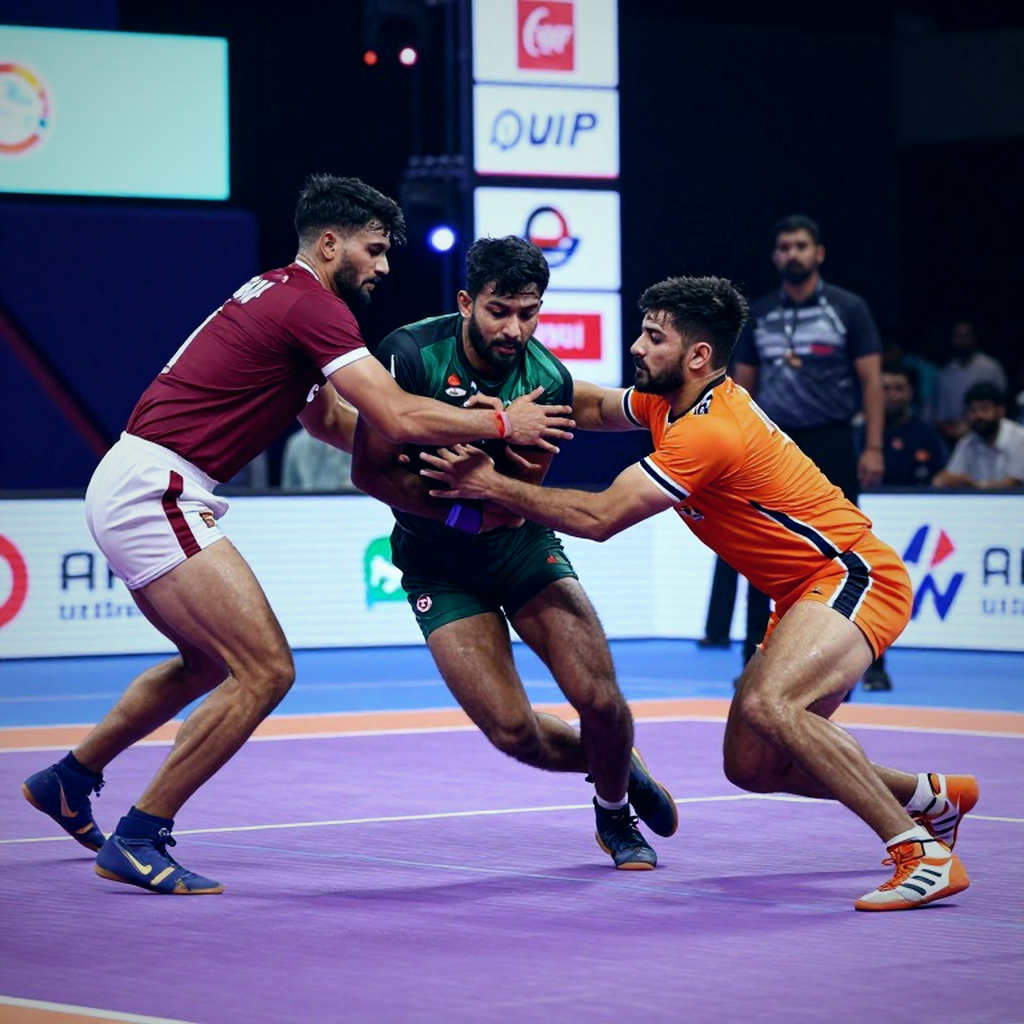
For readers meeting this sport for the first time, the vocabulary matters. A raider enters the opponent's half and must return within 30 seconds; touching a defender and getting home scores one point. Throughout the raid he must chant "kabaddi" continuously — if the cant breaks, the raid is void. The defence scores by tackling him inside their own half, one point. When all seven players of one side are ruled out, the opponent gets 2 points and the wiped side revives in full: the All Out, kabaddi's only true reset button. The bonus line runs deep in enemy territory; crossing it scores one point when the defending side has six or more players on court — a near-zero-risk scoring channel. A Super Tackle is a tackle completed with three or fewer defenders on court, worth 2, and the sport's cleanest momentum weapon. After two scoreless raids, the third becomes a do-or-die raid; fail to score and the raider himself walks off. The Asian Games plays Standard Style: rectangular court, 7 vs 7, two 20-minute halves. The circular rural game is a different animal entirely.
Half-time read 23-11. That is 34 points inside 20 minutes, or 1.7 points per minute. Kabaddi does not often run at that tempo when a match is lopsided, because raiders tend to slow down and protect. India were not protecting anything in the first half. They were striking.
Break India's 37 apart. Three All Outs produced 6 points, 16.22 percent of the total. Bonus points produced 3. The remaining 28 came from touches and tackles — 75.68 percent. Elite national sides usually balance bonus accumulation against penetration; an 8 percent bonus share means India's raiders were not content to lean over a line and walk back. They came to find bodies. That 28-of-37 penetration profile is the least-discussed tactical fact of this match.
Now the other column. Nine bonus, four from Super Tackles, eight residual — 42.86, 19.05, 38.09. With thirty thousand people in the stands those numbers feel like bookkeeping. They are not. A side that draws roughly 43 percent of its points from the bonus line is surviving, not competing. Chinese Taipei could not or would not break India's corner pairing through deep penetration, so they took the safe single point again and again. There is no shame in it; it is the classic underdog survival channel at international level. But it cannot be mistaken for contention.
The question the scoreline buries is about India's defence. Chinese Taipei's breakdown contains no All Out points at all: 9 plus 4 plus 8 equals 21. Which means India were never All Out across the entire match. Seven Indian defenders were never wiped off the mat — not by a thigh hold, not by a chain tackle, not by bonus pressure. That is indirect evidence, not proof, but in kabaddi, failing to wipe out a defence says something real about its stability.
I wrote the counter-entry too, because a notebook should not be one-sided. Chinese Taipei completed two Super Tackles. That means at least twice India were defending with three or fewer players on court, and the raider went for a touch anyway and was caught. Those moments are exactly where 2 points and, often, an All Out live. India took 6 points from three All Outs while twice failing to finish raids against a depleted defence of their own — the smallest and most actionable leak in the performance. It will not drown a group-stage opponent. Against Iran it might.
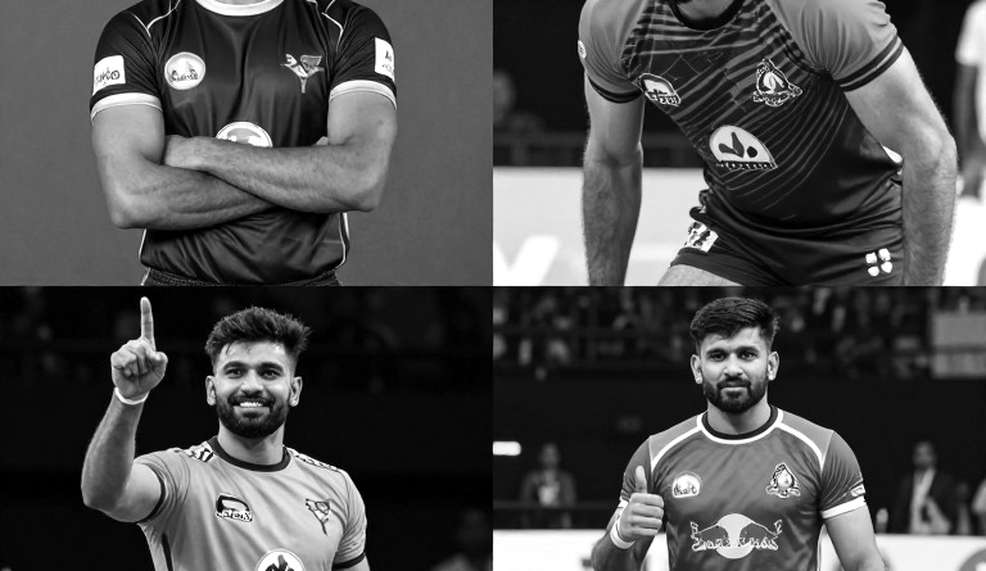
On individuals, I stay with what the report supports. Aslam Inamdar and Rahul Sethpal held the right corner, with Sethpal's ankle hold controlling the early phase. Devank Dalal and Ayan Lohchab were sent in during the second half to find touches and hold the advantage. For Chinese Taipei, Chung-mao Chang produced an important ankle hold during their attempted comeback.
Then the absence that is itself information. The names that usually dominate any conversation about an Indian kabaddi squad simply are not here; only four players are named at all. Two readings are possible — deliberate rotation in a winnable fixture, or a genuinely transitional national side. The source does not settle it. Read the second-half raider rotation together with the fact that India were never All Out, and one reading gains weight: the team was managing workload with the result already under control. Sensible, with a semi-final ahead.
Here I have to return to the language I actually think in. In 2026 I rewatched one race fourteen times while everyone else watched Usain Bolt's farewell: Christian Coleman's 9.94 silver in London, and the start mechanics underneath it. The start nobody watches is the start that builds the race. A 30-second raid has the same body. If a raider taps the first two seconds away in search of a safe line, the raid is already lost. India's raiders went inside in this match. Chinese Taipei's raiders stopped at the line, touched it, and walked home with one point. Nobody becomes a contender by refusing to widen the margin. Coleman finished; not everyone does. Nine bonus points is the athletic equivalent of a race that never reached the drive phase.
Track and kabaddi keep showing me the same family photograph. I stayed up until three in the morning after Karsten Warholm's 45.94 in Tokyo, and I understood something similar watching Gianluigi Donnarumma's penalty saves at Euro 2026: timing and body shape are two spellings of one word. Nobody calls those saves metrics, but they were measured to the centimetre. The distance between 37 and 21 here is also written in metrics. It is not "strength." It is 75.68 against 38.09.
Now the contrarian turn, which is the part I trust most. An unbeaten group campaign is a real achievement and a low-information one. The semi-final arrives on September 25, 2026, against a defence better than this one. Anyone reading top of Group A as gold-medal certainty should remember that beating a catch-up-tier opponent by sixteen proves the system is running, not that it is untouchable. The structure of international kabaddi has barely shifted in two decades: India at the top, Iran below them, then a wide space.
One more line from the notebook belongs here: I kept a notebook through the silent stadium and heard the game change its breathing. That lesson still applies. What this match lacked was noise — no crowd heat, no viral moment. What it contained was a genuine data point: an East Asian side, in territory where kabaddi is not a native sport, posting 21 points against India, four of them from legitimate Super Tackles and one from a real ankle hold. For a sport that keeps talking about Olympic inclusion, that carries more weight than a press release.
That enthusiasm needs a guardrail nobody is writing about. The report comes from a single Indian digital outlet, and none of its information points carry an attributed source. There are no individual raid or tackle totals, no raid success rates, no injury update. Where 37 points are on the board that question is not urgent, but the material is informational rather than authoritative. One further item is worth keeping flagged rather than argued: kabaddi's presence on a multi-sport programme is negotiated per edition and should be verified, not assumed.
Two lines in the risk column. Kabaddi is a high-contact sport with chronic knee, ankle and shoulder exposure; the report mentions no injury, which means only that none was reported. When intensity jumps in a knockout, that exposure becomes visible. And this match was face-control, not a footballing dismantling. Whether face-control works twice is the actual question.
September 25, 2026 is India's first real measuring stick. I will keep three notes in the book, and readers should too. First, how many Super Tackles India concede: repeated failure to finish raids against depleted defences is a discipline problem, not a weakness, and discipline can be coached in a week. Second, squad composition: does the rotated group campaign produce a full-strength side or reveal a transitional one? Third, the opponent's bonus reliance: if another team takes more than 40 percent of its points from the bonus line, India's defensive depth still is not frightening anyone.
The best question in sport never changes: which lane is someone running in, and which lane is nobody watching? 37-21 is a whistle. The two different point sources behind it — penetration on one side, the bonus line on the other — will keep sounding long after the whistle stops. On September 25 we find out whether India are merely bigger than their opponents, or something structurally different.